


Today, the Italian demographic landscape is characterized by over 3.6 million non-EU residents, with a majority of women, many of whom work in care and domestic sectors that are essential for the country’s elderly population. Although people with a migrant background now represent 8.5% of the population and play an indispensable role in supporting the economy, challenges remain regarding fair integration, labor rights, and cultural inclusion. In this context, innovative practices are emerging to address these complexities.
In this article we will examine two examples in which food is more than just nourishment: it is a powerful vehicle for social inclusion, empowerment, and cultural exchange. In Italy, two innovative projects—M’ama Food in Milan and Altre Terre Food Truck in Bologna—demonstrate how culinary initiatives can uplift migrant women, foster community ties, and promote cultural pluralism. While each project has unique characteristics, they share several core principles and approaches.
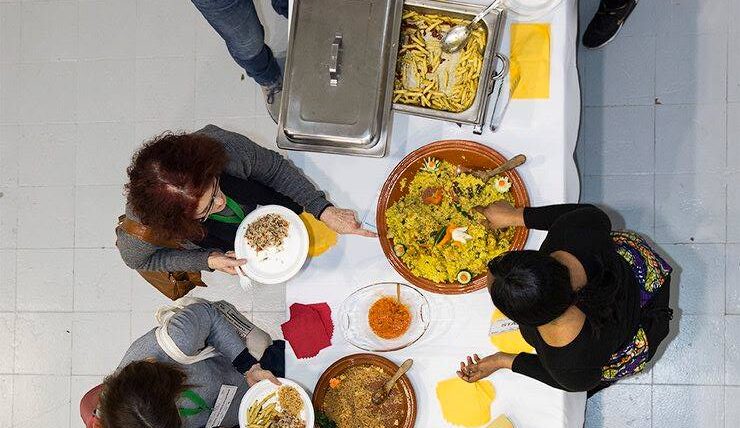
Based in Milan and led by Farsi Prossimo cooperative and promoted by Caritas Ambrosiana, M’ama Food is a well-established initiative that has grown from a refugee center project into a thriving social enterprise. It focuses on catering and banqueting, providing both employment and a sense of ownership to its participants. The project actively involves local actors—companies, citizens, and third-sector organizations—ensuring broad-based support and long-term impact. Participants receive kitchen skills training, HACCP certification, and soft skills development, with flexible schedules to accommodate mothers. The ultimate goal is for women to take full ownership of the enterprise, achieving true economic independence. The initiative is financially self-sustaining, generating income through catering services and continuously expanding its reach.
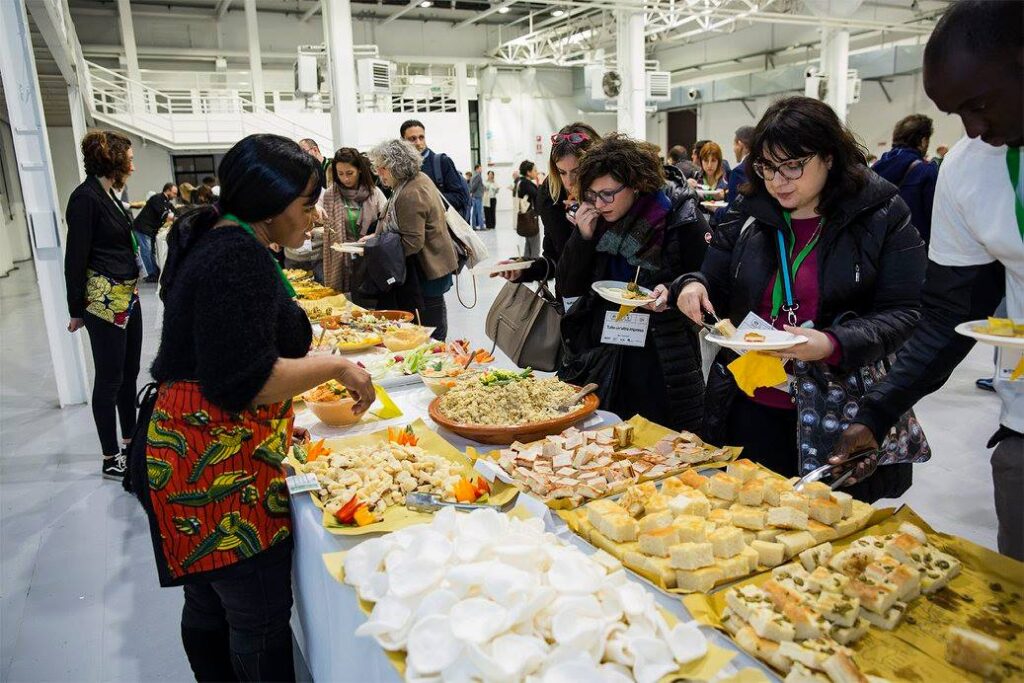
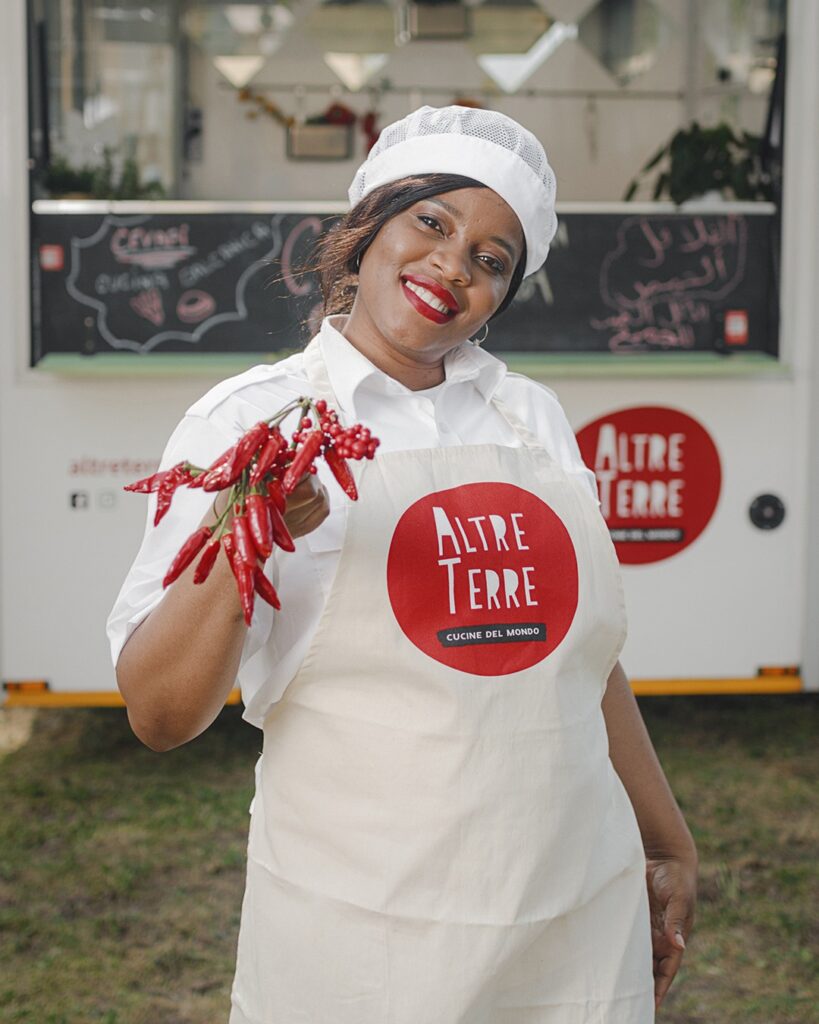
Operating in Bologna, Altre Terre Food Truck is led by MondoDonna Onlus and brings a dynamic, mobile kitchen to foster the empowerment of migrant women. Under the guidance of a professional chef, participants learn not only cooking skills but also food business management and customer interaction. Women co-create recipes that blend their cultural heritage with Italian cuisine, fostering creativity and dialogue. The food truck participates in festivals and events, reaching diverse audiences and raising awareness about migrant women’s stories and talents. Activities extend beyond food service to include workshops in schools and libraries, combining food with creative education for broader community impact.
Despite differences in structure and scale, both projects share several key elements:
- Empowerment through work: both initiatives provide real job opportunities, helping women move towards independence.
- Integration of language and skills training: language learning is embedded within practical, work-based contexts, accelerating integration.
- Active community engagement: both projects rely on strong partnerships with local institutions, businesses, and citizens.
M’ama Food and Altre Terre Food Truck exemplify how food-based social enterprises can drive meaningful change for migrant women in Italy. By combining skill development, cultural exchange, and community engagement, these initiatives offer replicable models for empowerment and integration. Their shared values—empowerment, inclusion, and creativity—demonstrate the transformative potential of food in building bridges and fostering resilient, diverse communities.
