


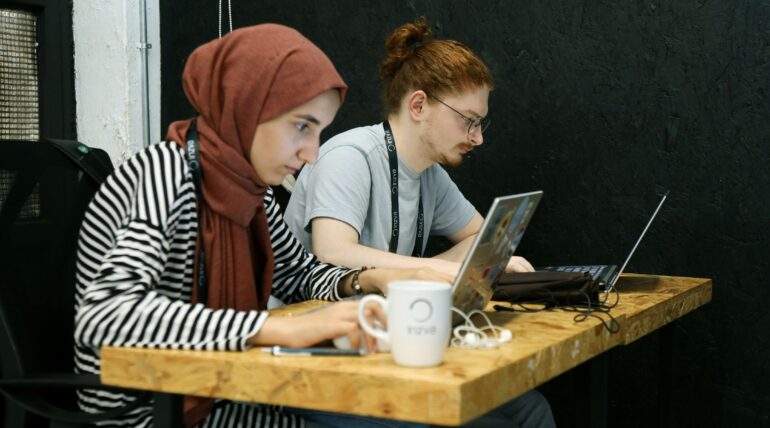
At SOULFood, we believe that learning becomes truly transformative when it is practical, interactive, and rooted in real life. Our project is dedicated to creating meaningful learning and opportunities for migrant women, combining culinary education, digital skills and civic competences to support their social and professional life.
One of the central ways we are doing this is through the development of a set of interactive toolkits: modular learning resources that can be used in blended learning pathways. These toolkits are being designed specifically for and with migrant women, acknowledging their strengths, experiences, and the barriers they often face in accessing education.
Why interactive toolkits?
Many migrant women balance work, care responsibilities and complex migration journeys. They may have had interrupted schooling, be navigating a new language, or feel insecure about their digital skills. In this context, long, traditional courses can feel intimidating or simply impossible to attend.
Interactive toolkits offer a different approach:
- Short, modular units that can be used independently, so learners can enter at different points and progress at their own pace.
- Practical, hands-on activities that start from the kitchen and everyday life: cooking tasks, hygiene routines, food storage, planning a menu, or sharing recipes from home.
- Multimedia and visual support (images, icons, step-by-step sequences, templates) that lower language barriers and speak to different learning styles.
- Self-assessment to monitor progress.
What’s inside the toolkits?
The toolkits are designing with the support of all partners and the materials cover areas such as:
- Culinary skills and kitchen organisation: from basic hygiene and safety, to understanding tools and equipment, food preservation, mise en place, and core cooking techniques.
- Healthy eating and sustainability: exploring nutrition, food waste reduction, and the links between what we eat, our health, and the environment.
- Digital and civic competences: using smartphones and online tools to search for recipes, access services, document skills, and participate more actively in community life.
Each unit is conceived as a toolkit in itself, with clear learning outcomes, step-by-step activities, visual aids, interactive exercises, and short quizzes or self-assessment prompts that help both trainers and learners track progress.
Our methodological approach
Behind each toolkit there is a strong methodological backbone: we are not only producing content, but designing empowering and realistic learning experiences for adult women. We use an intercultural and gender-sensitive pedagogy where food becomes a safe space to talk about identity, belonging and women’s multiple roles in their families and communities. Complex skills are scaffolded into small, achievable steps that can be used flexibly in face-to-face workshops or online settings. Ultimately, these toolkits are not just a collection of recipes, checklists or worksheets. They are bridges: between cultures, between everyday life and formal learning, between individual aspirations and collective change.
